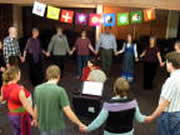
"The Dances of Universal Peace and Zikr are an excellent way to prepare for meditation and meditation is an excellent way to prepare for the Dances of Universal Peace and Zikr." ~ Murshid Samuel Lewis
What is "Zikr"? Zikr - or dhikr (both, transliteration from Arabic) - is a 1500 year old form of rhythmic movement and vocalization that utilizes sacred words and phrases to draw its practitioners toward awakening of the heart, enlivening of spirit, and deepening of awareness and feeling, compassion and joy. Zikr is moving, with chanting or singing, often enhanced by evocative rhythms and melodies with or without accompaniment of drums or musical instruments.
Like the Dances of Universal Peace, zikr invites people to move together and to vocalize in unison. Movements are simple and repetitive, usually standing and sometimes sitting. Diverse mystical traditions around the globe have for millennia understood that devotional phrases repeated again and again can re-awaken consciousness of Divine Unity. Sufis have engaged and developed zikr as a much beloved devotional vehicle that leads one to the innermost reality that abides in all. Zikr calls upon the memory of the true nature of being that lies within each of us.
"Zikr is the perfection of remembrance, and the remembrance of perfection." ~ Moineddin Jablonski
"'Remembrance' connotes something of the past; zikr is remembrance of that which is ever-present. Zikr is both celebration and medicine; we celebrate each other and the Divine that unites us, and where we feel disconnected from others, from Self or from God, zikr draws us closer." ~ Shivadam
"Zikr means 'remembrance' - remembering who we are beyond the limitations of our physical selves, and the glory that we are inescapably a part of. Zikr is the practice of chanting or singing prayer and praise to this All-Pervading Reality. This produces the fire of Love in the heart of the devotee, a recognition of the interconnectedness of all things, and a greater ability to live from within that recognition." ~ Sky Májida Roshay Ulitmately, zikr is not knowable by description; it is understood by experiencing it directly and from within. Like kirtan, yoga, or mantra repetition, zikr is universal and may be practiced by anyone interested in deepening and enlivening their experience of life.
Like other spiritual practices, we undertake zikr for the benefit of all beings. |